If you've driven anywhere in Lee or Collier County in the last week, the front of your car is currently wearing a brown paste of approximately 6,000 deceased Plecia nearctica, and your windshield has reached the state of opacity that local mechanics professionally refer to as "May." Welcome to lovebug season.
Welcome, also, to the most unscientific market indicator we've ever put in a blog post — and one of the most surprisingly accurate.
Stay with us.
The lovebug calendar is almost exactly the SWFL listing calendar
Lovebugs in Florida have two emergences per year: late April through May, and late August through September. According to the University of Florida IFAS, each flight lasts about four to five weeks, peaks fast, blankets the coast, and then mercifully disappears. (UF IFAS — Lovebug fact sheet)
The bug is annoying. The pattern is perfect.
Here's the part nobody told you: those two peak lovebug windows happen to map almost exactly onto the two strongest buyer-urgency windows in Southwest Florida real estate.
The May window is the snowbird-departure rush — the buyers who've been touring all season, sleeping on it, calling their accountant, sleeping on it again, and have now decided this is the year before they fly north. They want to be under contract before the gate agent scans their boarding pass. The numbers back this up: in February alone, Naples saw pending sales jump 55.9% year-over-year, with condo pendings up 82%. That energy crests in May. (NABOR February 2026 Report)
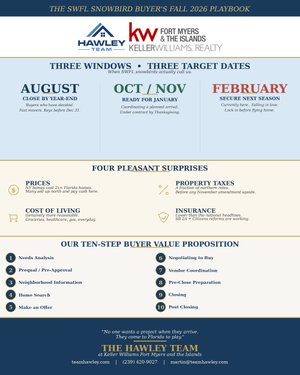
The September window is the season-prep rush — the relocators and returnees who want to be moved in, painted, and stocked before October showings turn into a stampede.
Two windows of bug splat. Two windows of buyer urgency. Coincidence? Almost certainly. But here at Team Hawley, we are choosing to believe the lovebug is, in fact, a leading economic indicator. We invite Bloomberg to dispute us.
The "Lovebug-Proof House" checklist (and why it quietly predicts resale value)
This is the part where the joke turns into something useful, so stay with us.
The features that protect your car from lovebug assault are, almost without exception, the same features that command a premium at resale in Southwest Florida. We didn't design it that way. The market did. The lovebug just happens to be the most honest test of which homes were actually built for this climate.
Here is the unofficial, unsanctioned, and entirely defensible Team Hawley Lovebug-Proof Home checklist:
A 2.5-bay garage that fits a full-size pickup with the doors open. Buyers used to ask whether a house had "two-car parking." Buyers in 2026 ask whether the garage will swallow an F-150 and a kayak rack. Homes with deep, side-load, or 2.5-bay garages routinely outperform their comp sets in SWFL. The bug doesn't get to your car if the car never leaves the garage.
A covered front entry — not a four-foot portico, an actual covered entry. Two functions: it keeps the bugs off your guests during the four-second walk from the car to the door, and it keeps your front-door paint from baking in the sun for eleven months a year. Buyers notice this in two seconds. Appraisers notice it more slowly.
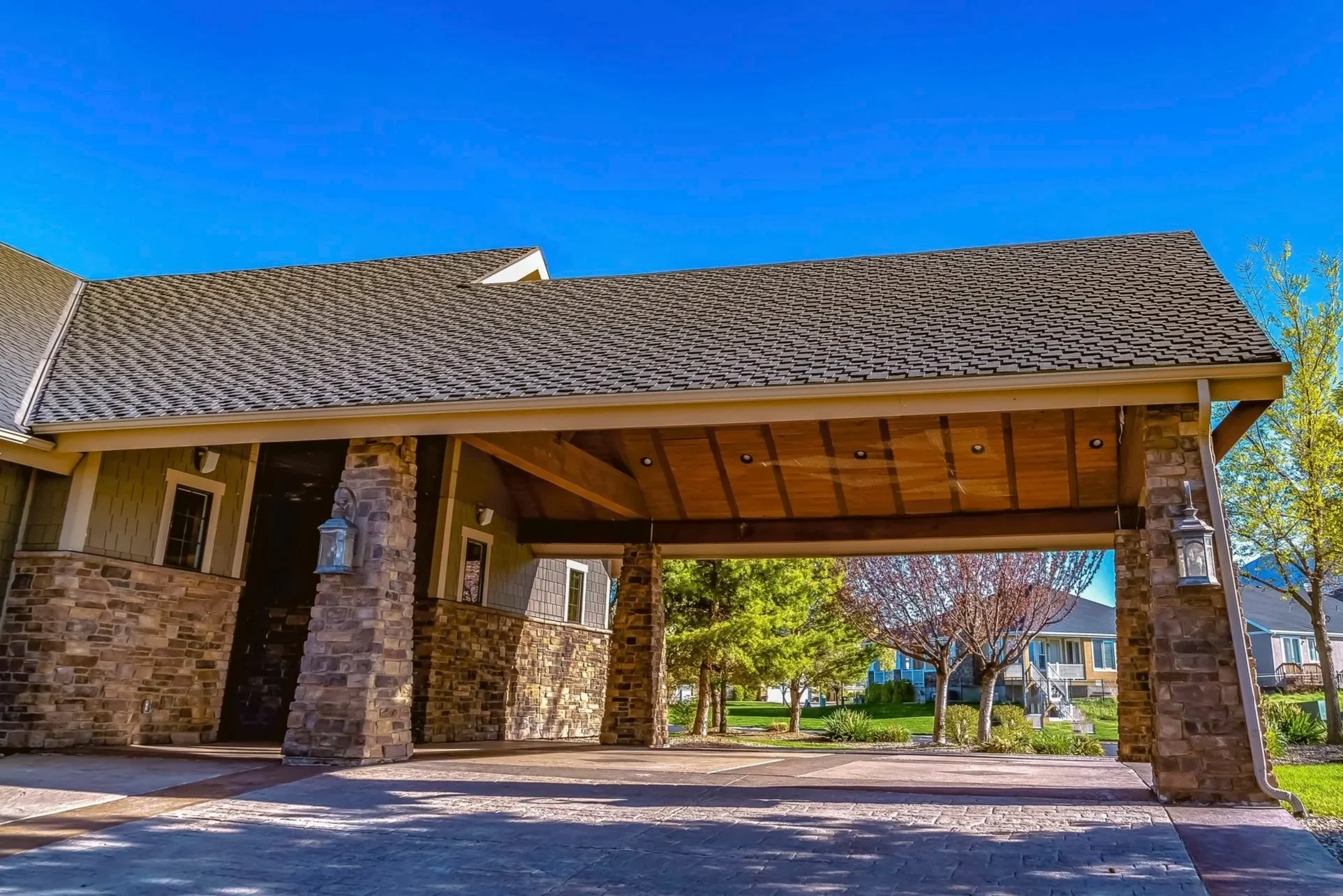
A porte-cochère, if you can swing it. This is the SWFL flex move. You drive in, get out under cover, walk into the house — and the lovebugs never touched you. You also never touched the rain, the sun, or the heat. Porte-cochères are quietly the highest-ROI architectural feature in this market that almost nobody talks about.
A deep, screened lanai with a real summer kitchen. This is the difference between a house people visit and a house people live in. The bugs can't get past the screen. Your buyers can't get past the kitchen. (More on this in a forthcoming post on why the Florida lanai is quietly the best $40,000 you'll ever spend.)
A roof under 12 years old, with a current wind-mit on file. Yes, we slipped a real one in. Insurance carriers in 2026 won't write a new policy on a roof much past 15 years, which means roof age is functionally the most important number on a SWFL listing right now. The lovebugs do not care. The buyers do.
Run your home through that checklist. The number of features it has is, very approximately, the number of percentage points by which it will outperform a comparable home that has none of them. We are not aware of any peer-reviewed study confirming this. We are also not interested in conducting one.
The lovebug is the best locals-vs-newcomers test in the state
Here is the broader thing the lovebug is trying to tell you, and it applies to a lot more than your bumper.
Locals know lovebug season is four weeks. They wash the car twice, complain politely at the coffee counter, and then go on with their lives. Newcomers think Florida has become uninhabitable. They post about it. They consider moving back to Ohio.
That, in two sentences, is the entire SWFL market psychology in 2026.
Locals — meaning anyone who has owned a home here for more than three seasons — know that the things that look terrifying to outsiders are mostly cyclical. Hurricane season comes and goes. The August humidity comes and goes. The slow summer market comes and goes. The loud insurance noise of the last three years is, finally, going. Bonita Springs months-of-supply just contracted from 12 months down to 7.8 in a single year. Naples luxury inventory above $1.5M dropped 17.4%. Citizens insurance is cutting rates 8.7% on June first. (Worthington Realty — Bonita Springs March 2026, Citizens Property Insurance)
The bug, like everything else here, is temporary. The fundamentals are not.
The buyers and sellers who are winning in this market are the ones who can tell the difference between a four-week bug season and a structural problem. The ones who are losing are the ones who treat every bug like a hurricane.
Four weeks. Then they're gone.
You can't outrun lovebugs. You can't outrun market cycles. You can wash your car. You can price your home correctly. You can install the porte-cochère.
The good news is both pass quickly, and the people who handle both well end up with a clean car and a sold house.
If you'd like us to come walk through your home and tell you exactly which boxes on the Lovebug-Proof Home Checklist it actually checks — and what that means for what it could realistically sell for in the next 60 days — we'd love to. We'll bring the comps. We'll even bring the bug-and-tar remover.
Team Hawley — Southwest Florida real estate, with a sense of humor about all of it. 📞 Call or text us | 💌 Contact us at teamhawley.com
Sources: University of Florida IFAS — Lovebug fact sheet · NABOR February 2026 Market Report · Worthington Realty — Bonita Springs March 2026 · Citizens Property Insurance Rate Filing